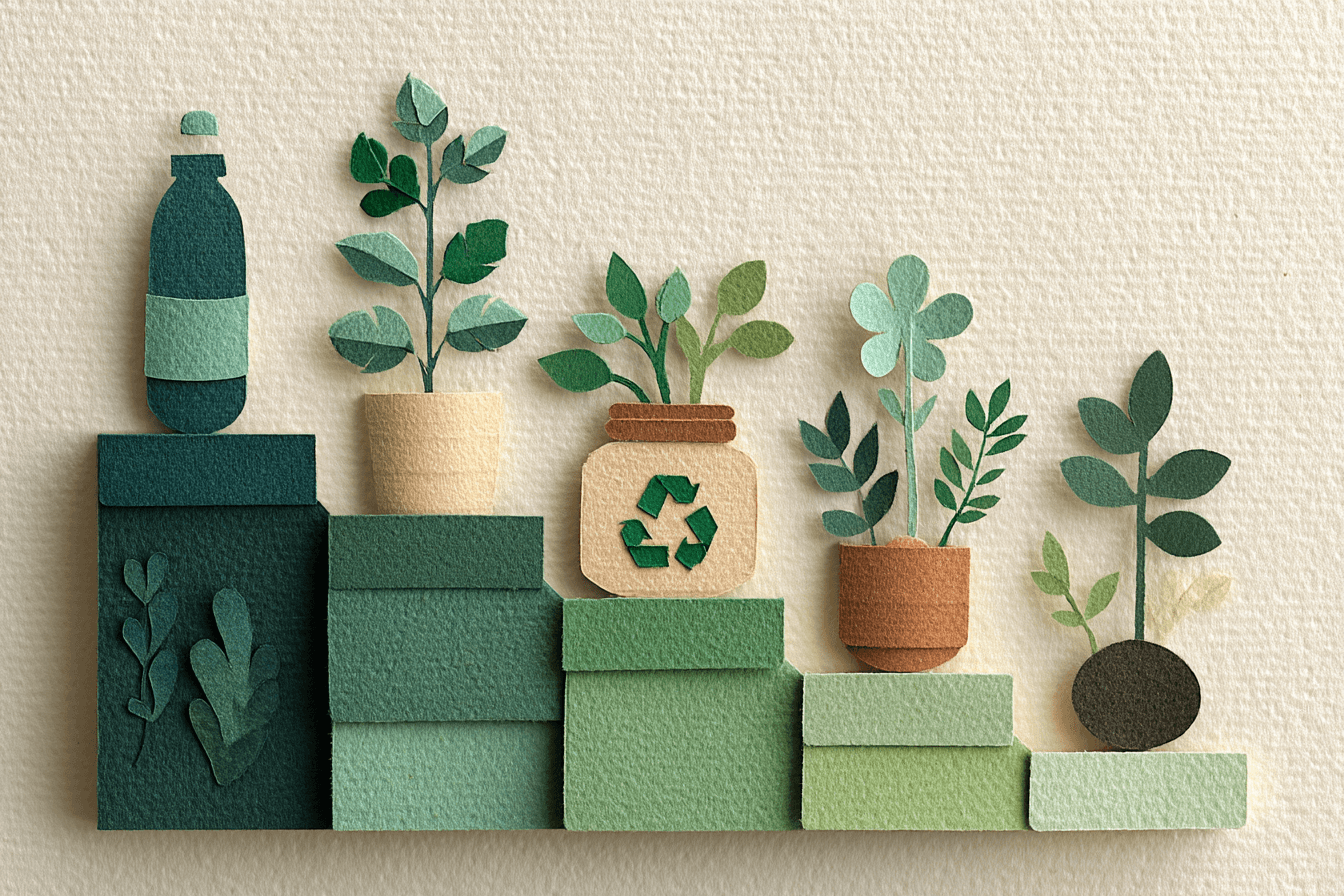
Module 01
~30 minIntroduction to 5R Principles
Learning Objectives
- Understand the concept of sustainability and why it matters today
- Identify the 5R principles: Refuse, Reduce, Reuse, Recycle, Rot
- Apply the 5R hierarchy to everyday decisions
- Recognise your own impact on natural systems
Introduction to Sustainability & the 5R Principles
Sustainability is one of the defining challenges of our time, yet it is also one of the greatest opportunities for positive change. In 1987, the United Nations Brundtland Commission defined sustainable development as "development that meets the needs of the present without compromising the ability of future generations to meet their own needs." This simple but powerful idea reminds us that every resource we use, every product we buy, and every piece of waste we generate has consequences that extend far beyond our own lives.
For many adults, sustainability can feel like an abstract or overwhelming concept. We hear about climate change, plastic pollution, and resource depletion in the news, but it is not always clear what we as individuals can do about it. The good news is that meaningful change does not require dramatic lifestyle overhauls. It begins with understanding a few core principles and applying them consistently in our daily routines.
This module introduces you to the 5R framework - Refuse, Reduce, Reuse, Recycle, and Rot - a practical hierarchy that guides us toward more sustainable choices. The 5R principles are not just about waste management; they represent a mindset shift in how we relate to the materials and products in our lives. By the end of this module, you will understand why prevention is always better than cure when it comes to waste, and you will have concrete strategies to start making a difference today.
Sustainability is not about being perfect. It is about being aware, making better choices where we can, and continuously improving. Whether you live in a city apartment or a rural house, whether you are a student or a retiree, the 5R principles can be adapted to your circumstances and help you live more lightly on the planet.
The 5R Hierarchy: Refuse, Reduce, Reuse, Recycle, Rot
The 5R hierarchy provides a structured approach to minimizing waste, ordered from the most to the least impactful action. Think of it as a decision-making ladder: always start at the top and work your way down only when the higher steps are not possible.
Refuse is the first and most powerful step. It means saying no to things you do not need - free promotional items, single-use plastic bags, unnecessary packaging, junk mail, and disposable cutlery. Every item you refuse is an item that never enters the waste stream at all. Refusing takes awareness and sometimes a bit of courage, but it sends a clear market signal that consumers demand less wasteful options. Carry a reusable bag, decline straws and freebies, and choose products with minimal packaging.
Reduce means cutting back on what you consume. Buy only what you truly need, choose quality over quantity, and plan purchases to avoid impulse buying. Reducing applies to food (plan meals to avoid waste), clothing (build a capsule wardrobe rather than chasing trends), energy (turn off lights, lower the thermostat), and water (fix leaks, take shorter showers). Every reduction in consumption means fewer resources extracted, less energy used in production, and less waste generated.
Reuse means using items again for their original purpose instead of discarding them after a single use. Refill water bottles, bring your own coffee mug, shop at second-hand stores, donate items you no longer need, and repair broken things rather than replacing them. The reuse economy - from charity shops to online swap groups - keeps products in circulation far longer than their original owners might have intended.
Recycle is the process of converting waste materials into new products. While recycling is important, it requires energy and infrastructure, and not all materials can be recycled indefinitely. Always check your local recycling guidelines, rinse containers before recycling, and avoid "wishful recycling" - putting non-recyclable items in the recycling bin, which can contaminate entire batches. Common recyclables include paper, cardboard, glass, metal cans, and certain plastics (usually marked with resin codes 1 and 2).
Rot refers to composting organic waste - food scraps, garden trimmings, coffee grounds, and other biodegradable materials. When organic waste goes to landfill, it decomposes anaerobically and produces methane, a potent greenhouse gas. Composting at home or through municipal programmes turns this waste into nutrient-rich soil amendment, closing the biological nutrient loop. Even apartment dwellers can compost using vermicomposting (worm bins) or Bokashi fermentation systems.
Why the Hierarchy Matters: Prevention Over Cure
The 5R hierarchy is deliberately ordered because not all waste management strategies are equally effective. Prevention - refusing and reducing - always has a greater environmental benefit than recycling or composting. Every product that is never manufactured saves the raw materials, energy, water, and emissions associated with its entire lifecycle: extraction, production, transport, use, and disposal.
Consider a simple plastic water bottle. Recycling it is better than sending it to landfill, but manufacturing the bottle in the first place required petroleum extraction, industrial processing, filling, labelling, refrigeration, and transportation - often across thousands of kilometres. Refusing the bottle entirely and drinking tap water from a reusable container eliminates all of those impacts.
This does not mean recycling is unimportant. It means we should exhaust all higher options first. The European Union's Waste Framework Directive enshrines this hierarchy in law, requiring member states to prioritize prevention, then reuse, then recycling, then recovery, and only as a last resort, disposal. Understanding this order helps us focus our efforts where they will have the greatest positive impact.
505 kg
Municipal waste per capita per year in the EU
Eurostat, 2023
49.6%
Municipal waste recycling rate across EU-27
Eurostat, 2023
7.5%
Circularity rate of the European economy
European Commission, Circular Economy Action Plan
Zero-Waste Shopping in Krakow
Krakow, PolandIn recent years, Krakow has seen a growing movement of zero-waste shops that challenge the conventional supermarket model. Stores such as these allow customers to bring their own containers and buy dry goods, spices, cleaning products, and personal care items in exactly the quantities they need - eliminating unnecessary packaging at the source.
These shops operate on a simple principle: products are stored in bulk dispensers, and customers fill their own reusable jars, bags, or bottles. Prices are calculated by weight, so shoppers pay only for what they take. This model dramatically reduces plastic packaging waste while also helping customers avoid overbuying, which is a common source of household food waste.
The impact on the local community extends beyond waste reduction. Zero-waste shops often source products from local and organic producers, supporting the regional economy and reducing transport emissions. They also serve as community hubs where people share tips on sustainable living, attend workshops on making natural cleaning products, and connect with like-minded neighbours.
While zero-waste shops still represent a small fraction of the retail market, their growing popularity in Polish cities demonstrates that consumer demand for packaging-free options is real and increasing. Each customer who switches even a portion of their shopping to a zero-waste store prevents hundreds of pieces of single-use packaging from entering the waste stream every year.
6 Practical Tips for Applying the 5R Principles
- 1
Carry a reusable kit with you - a water bottle, shopping bag, coffee mug, and a set of cutlery. Having these on hand makes it easy to refuse single-use alternatives whenever you are out.
- 2
Before any purchase, apply the 24-hour rule: wait a full day before buying non-essential items. This reduces impulse purchases and helps you distinguish between wants and genuine needs.
- 3
Start a repair habit. Learn basic mending skills for clothing, look up online tutorials for fixing electronics, and locate repair cafes in your area where volunteers help fix broken items for free.
- 4
Set up a simple home recycling station with clearly labelled bins for paper, plastic, glass, and metal. Making sorting convenient increases the likelihood that everyone in your household will participate.
- 5
Plan your meals for the week before shopping and write a detailed list. Meal planning is one of the most effective ways to reduce food waste - the average European household throws away approximately 70 kg of food per year.
- 6
Start composting kitchen scraps, even in a small apartment. A countertop Bokashi bin or a worm composting box can process food waste quietly and without odour, turning it into valuable fertiliser for plants.