Module 07
~30 minGreen Consumption & Eco-labels
Learning Objectives
- Critically evaluate product claims and certifications
- Distinguish between genuine sustainability efforts and greenwashing
- Make ethical consumption choices based on evidence
- Understand your power as a consumer to drive positive change
Green Consumption & Greenwashing
As a consumer, you have more power than you might think. Every purchase decision, when multiplied across millions of households, sends powerful signals to manufacturers and retailers about what kind of products the market demands. This is the essence of voting with your wallet: choosing products that align with your environmental and social values, and refusing those that do not.
Conscious consumption goes beyond simply buying 'green' products. It starts with the most fundamental question: do I need this at all? Overconsumption, even of sustainably produced goods, still depletes resources and generates waste. The most sustainable product is the one you do not buy. After that comes choosing products that are durable, repairable, ethically made, and minimally packaged.
However, making informed choices is not easy. There is a significant information asymmetry between companies and consumers. Brands control the narrative around their products through marketing, packaging design, and selective disclosure. A company might highlight one eco-friendly feature while concealing others that are environmentally harmful. This is where greenwashing enters the picture, and why developing a critical eye as a consumer is more important than ever.
In this module, you will learn to identify greenwashing tactics, understand which certifications and labels you can trust, and develop practical skills for handling the marketplace as an informed, empowered consumer.
Understanding Greenwashing
Greenwashing is the practice of making misleading or unsubstantiated claims about the environmental benefits of a product, service, or company. The term was coined in 1986 by environmentalist Jay Westerveld, who observed hotels asking guests to reuse towels to 'save the environment' while making no effort to reduce waste in their own operations.
Companies greenwash for a simple reason: sustainability sells. Surveys consistently show that consumers prefer environmentally responsible products and are often willing to pay a premium for them. This creates a financial incentive for companies to appear green without making the substantive changes that genuine sustainability requires.
The environmental marketing firm TerraChoice identified what it called the 'Seven Sins of Greenwashing,' which remain a useful framework for spotting misleading claims. These are: the sin of the hidden trade-off (highlighting one green attribute while ignoring greater environmental impacts), the sin of no proof (claims that cannot be verified), the sin of vagueness (broad claims like 'all-natural' that are essentially meaningless), the sin of irrelevance (technically true but unhelpful claims, like 'CFC-free' when CFCs are banned by law), the sin of lesser of two evils (a green claim within an inherently unsustainable product category), the sin of fibbing (outright false claims), and the sin of worshipping false labels (fake certification logos or made-up eco-seals).
Greenwashing undermines trust in genuine sustainability efforts. When consumers cannot distinguish between authentic eco-friendly products and those that merely claim to be, they may become cynical about all environmental claims, reducing the market advantage that truly sustainable businesses deserve.
How to Spot Greenwashing: Common Tactics
Greenwashing takes many forms, but some tactics are especially prevalent. Vague language is perhaps the most common: terms like 'eco-friendly,' 'natural,' 'green,' 'clean,' and 'sustainable' have no legal definition in most contexts and can mean virtually anything. A product labelled 'natural' might still contain synthetic chemicals, while 'eco-friendly' could apply to a product that is marginally less harmful than a particularly destructive alternative.
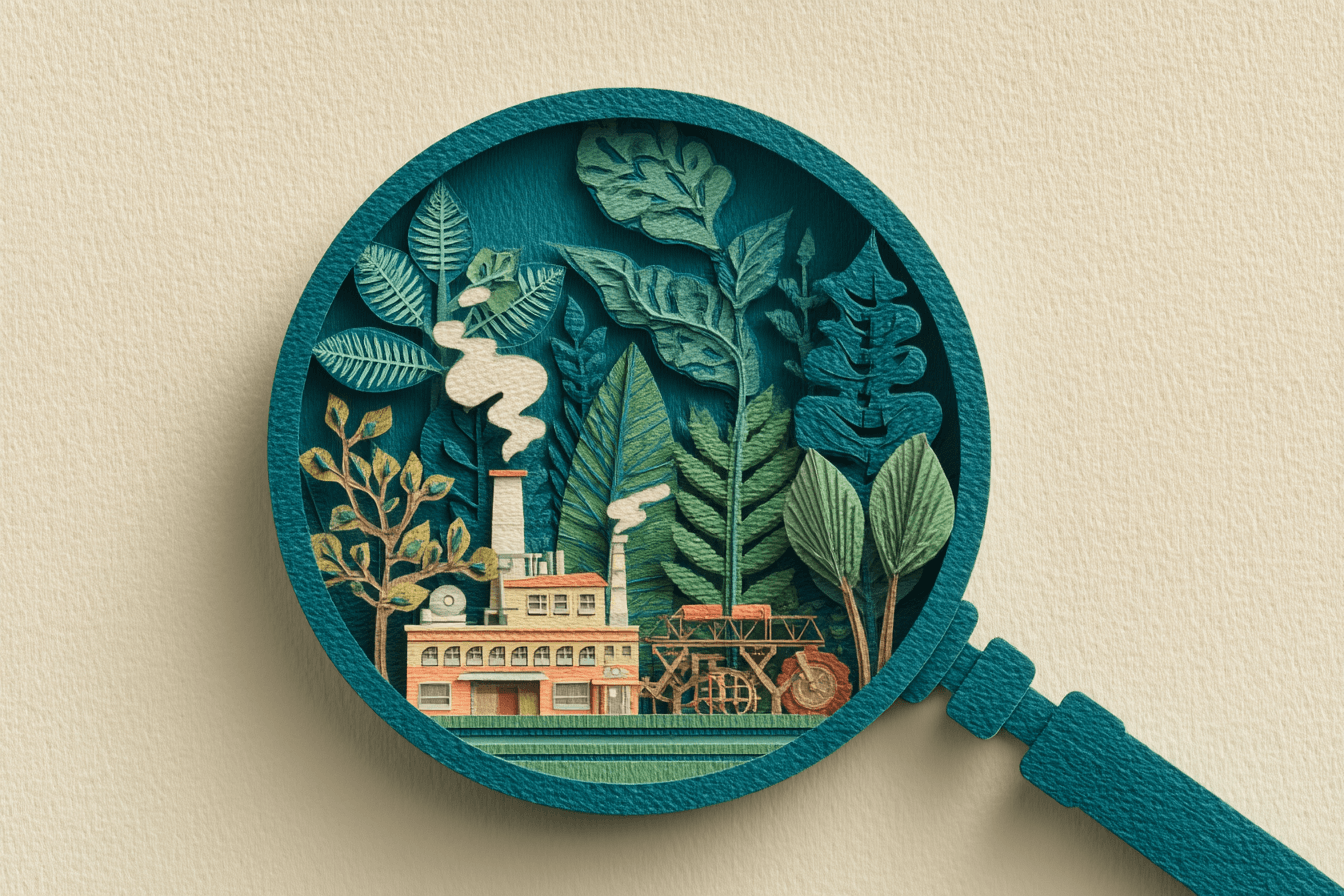
Misleading imagery is another frequent tactic. Packaging adorned with green colours, images of trees and leaves, and pastoral landscapes creates an impression of environmental friendliness regardless of the product's actual impact. Fossil fuel companies, for instance, routinely use nature imagery in advertising despite their core business being the extraction and burning of hydrocarbons.
Irrelevant claims distract from the real issues. A plastic product labelled 'BPA-free' might still contain other harmful plastics. A cleaning spray marketed as 'phosphate-free' is citing a substance already banned from most cleaning products. Hidden trade-offs present a genuine improvement in one area while concealing a worse impact elsewhere: a paper product from sustainably managed forests is still problematic if manufactured using highly polluting processes.
Self-created certifications and fake labels are particularly deceptive. Unlike recognised third-party certifications such as EU Ecolabel or Fair Trade, company-invented logos carry no independent verification or enforceable standards. Always check whether a certification is issued by an independent body with transparent criteria.
Certifications You Can Trust
Amid the noise of marketing claims, several rigorous, independently verified certifications provide reliable guidance for consumers seeking genuinely sustainable products.
The EU Ecolabel is the official European eco-label, identifiable by its green and blue flower logo. It is awarded to products and services that meet high environmental standards throughout their lifecycle, from raw material extraction to production, distribution, and disposal. The criteria are developed by scientists, NGOs, and industry experts and are independently verified. The label covers a wide range of products including cleaning supplies, paper products, textiles, paints, furniture, and tourist accommodation.
B Corp certification evaluates a company's entire social and environmental performance, not just individual products. Certified B Corporations meet rigorous standards of governance, worker treatment, community impact, and environmental practice. The certification is administered by the non-profit B Lab and requires re-certification every three years.
Fair Trade certification guarantees that producers in developing countries receive fair prices, workers have safe conditions and fair wages, and environmental standards are met. The familiar black, blue, and green logo is most common on coffee, tea, chocolate, bananas, and cotton products.
Energy Star is the international standard for energy-efficient consumer products, particularly electronics and appliances. Products carrying the Energy Star label meet strict energy efficiency guidelines set by the European Commission.
GOTS (Global Organic Textile Standard) is the leading certification for organic textiles, covering every stage of processing from harvesting raw materials to responsible manufacturing, labelling, and trading. Cradle to Cradle certification evaluates products across five categories: material health, material reutilisation, renewable energy, water stewardship, and social fairness.
73%
Consumers willing to change habits for environmental impact
Eurobarometer, 2023
53%
Environmental claims in the EU found vague or misleading
European Commission, 2021
90,000+
Products carrying the EU Ecolabel
European Commission, 2023
EU Green Claims Directive: Ending the Era of Greenwashing
Brussels, BelgiumIn March 2023, the European Commission proposed the Green Claims Directive, a landmark piece of legislation designed to crack down on unsubstantiated environmental claims in the European marketplace. The directive responds directly to a 2021 Commission study that found 53 percent of environmental claims in the EU were vague, misleading, or unfounded, and 40 percent lacked any supporting evidence.
Under the proposed directive, companies making environmental claims about their products or services will be required to substantiate those claims using recognised scientific methodologies, including lifecycle assessment. Claims must be verified by independent, accredited auditors before they can be used in marketing. The directive also targets the proliferation of private eco-labels by requiring all new labelling schemes to demonstrate added value over existing ones and to be approved by a national authority.
Penalties for non-compliance will include fines, exclusion from public procurement, and confiscation of revenue gained through misleading claims. The directive complements the existing Unfair Commercial Practices Directive, which already prohibits deceptive advertising but has proven insufficient to address the scale of environmental misinformation.
For consumers, the directive promises a marketplace where 'green' actually means something. For genuinely sustainable businesses, it levels the playing field by preventing less scrupulous competitors from free-riding on vague environmental messaging. The legislation is expected to be implemented across EU member states in the coming years, representing one of the most significant regulatory interventions against greenwashing anywhere in the world.
6 Tips for Spotting and Avoiding Greenwashing
- 1
Be sceptical of vague claims. Words like 'eco-friendly,' 'natural,' 'green,' and 'clean' have no standardised definition. Look for specific, measurable claims backed by data or third-party certification.
- 2
Check for recognised certifications. Genuine eco-labels like EU Ecolabel, Fair Trade, FSC, and B Corp are backed by independent audits. Be wary of logos you do not recognise, especially if they appear to be company-created.
- 3
Look beyond the packaging. Green colours and nature imagery do not make a product sustainable. Read the ingredients list, check where the product is made, and research the company's overall environmental track record.
- 4
Beware of the 'lesser of two evils' trap. A slightly less polluting version of an inherently unsustainable product may not deserve your purchase. Consider whether there is a fundamentally better alternative.
- 5
Research before you buy. Use apps and websites that rate products and companies on their sustainability claims. Independent consumer organisations and environmental NGOs often publish guides and rankings.
- 6
Report suspected greenwashing. Consumer protection agencies in most EU countries accept complaints about misleading advertising. Your report helps protect other consumers and incentivises honest marketing.